
Soundproofing
Soundproofing Insulation for Walls, Floors, and Ceilings
Soundproofing insulation is used to reduce unwanted noise transfer between rooms, floors, and adjoining spaces within a building. In homes, offices, and multi-storey buildings, effective sound insulation improves comfort, privacy, and usability by limiting airborne noise and vibration passing through walls, floors, and ceilings.
This page focuses on soundproofing insulation products used in South Africa where acoustic performance is the primary requirement. The solutions shown below are commonly specified for acoustic insulation applications in residential and light commercial buildings, particularly where sound insulation for walls and between levels is required.


Aerolite Insulation
Price range: R520.00 through R629.00
Cavitybatt
Price range: R1,944.00 through R2,145.00
Factorylite Insulation
Price range: R903.00 through R1,820.00
Knauf Insulation
Price range: R899.00 through R1,325.00For more demanding soundproofing applications, Rockwool insulation boards and wired mats are a strong option. They offer excellent acoustic performance along with high fire resistance. View the full Rockwool Insulation range.
Soundproofing Insulation Products We Recommend
Glasswool insulation is the preferred material for soundproofing due to its proven acoustic absorption properties, flexibility within building cavities, and consistent performance across wall, floor, and ceiling applications.
The products shown above are widely used where sound insulation is required between internal spaces.
Soundproofing by Application
Soundproofing requirements vary depending on where noise travels within a building. Walls, floors, and ceilings each transmit sound differently, which means soundproofing insulation must be selected based on the specific application. The sections below explain how sound insulation is typically used in different parts of a building and which solutions are most effective for each area.
Sound Insulation for Walls
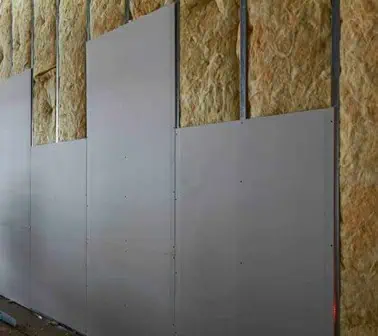
Walls are the most common source of noise transfer within buildings. Sound insulation for walls works by absorbing airborne sound within the wall cavity, reducing vibration and limiting noise passing from one room to another.
Glasswool insulation is commonly installed between wall studs to create an effective soundproofing walls solution. The fibrous structure of glasswool helps dissipate sound energy, making it suitable for both residential and commercial environments.
Soundproofing insulation for walls is frequently used in:
- Bedrooms and living areas
- Home offices and study rooms
- Offices and meeting rooms
- Apartments and multi-unit housing
Correctly installed acoustic insulation within wall cavities significantly improves sound separation without altering the finished wall surface.
Soundproofing Floors Between Levels
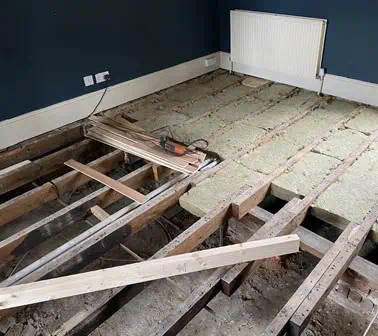
Noise travelling between storeys is a common concern in double-storey homes and apartments. Soundproofing insulation installed between floor structures helps reduce both airborne noise and impact sound passing between levels.
Glasswool sound insulation is fitted between floor joists to improve acoustic separation while also providing thermal benefits. This approach is commonly used in timber floor constructions where access allows insulation to be installed from below or during renovation.
Sound insulation between floors is particularly effective in:
- Double-storey residential homes
- Townhouses and duplexes
- Apartments and multi-level buildings
By insulating the floor cavity, noise transmission between levels can be significantly reduced.
Sound Insulation for Ceilings
Ceilings play an important role in controlling noise entering a space from above. Sound insulation installed above ceilings helps absorb airborne sound before it enters the occupied area below.
Glasswool soundproofing insulation is commonly used in ceiling cavities where noise reduction is required from upper floors or roof spaces. This includes applications where sound travels between rooms or between different occupancy levels.
Ceiling sound insulation is often specified for:
- Bedrooms below living areas
- Offices beneath occupied floors
- Multi-storey residential buildings

Why Glasswool Is Used for Soundproofing Insulation
Glasswool is widely regarded as the most effective material for acoustic insulation in building cavities. Its structure allows it to absorb sound energy efficiently, making it suitable for a wide range of soundproofing applications.
Key reasons glasswool is used for soundproofing insulation include:
- Excellent sound absorption
- Flexible fit within wall and floor cavities
- Consistent acoustic performance
- Compatibility with standard building systems
For these reasons, glasswool remains the preferred solution for sound insulation for walls, floors, and ceilings.
Choosing the Right Soundproofing Insulation
Selecting the correct soundproofing insulation depends on several factors:
- Application area – walls, floors, or ceilings
- Type of noise – airborne sound or impact noise
- Building construction – timber framing, masonry, or concrete
- Required level of sound reduction
Different areas of a building require different soundproofing approaches. Matching the insulation product to the application ensures effective noise control without unnecessary complexity.
Soundproofing Compared to Other Insulation Applications
Soundproofing insulation focuses on acoustic performance rather than thermal efficiency alone. While sound insulation often provides some thermal benefit, its primary role is noise reduction.
For insulation focused on temperature control rather than sound reduction, see:
- Wall Insulation
- Floor Insulation
- Ceiling Insulation
Each application page focuses on the insulation products best suited to that specific performance requirement.
Need Help Choosing Soundproofing Insulation?
If you’re unsure which soundproofing insulation product is best suited to your project, we can help you choose the correct glasswool solution based on the building structure and acoustic requirements.
Related Insulation Pages
- Insulation – A full breakdown of insulation types and uses.
- Materials – Explore insulation by material type.
- Applications – See which insulation suits each area of your home.
- Guides – Expert tips for installation, care, and choosing materials.
- Comparisons – Compare insulation products and materials side by side.