
Applications
Insulation Applications
Insulation applications refer to the specific areas of a building where insulation is installed, such as ceilings, roofs, walls, floors, and service systems. Every part of a building performs differently, which means each area requires the right type of insulation to work effectively. Whether you’re insulating a ceiling, roof, wall, floor or improving acoustic comfort, the application determines the material you choose and the results you achieve.
Every application has a purpose — and choosing the right one is the key to an efficient home. When each area is insulated correctly—ceiling, roof, walls and floors—you create a balanced system that delivers consistent comfort and long-term energy savings.
Ceiling Insulation
Ceiling insulation delivers the highest energy savings in any home. Up to 40–50% of heat loss and heat gain occurs through the ceiling, making it the most important insulation layer for South African climate conditions.
By slowing heat movement through the roof space, ceiling insulation helps keep homes warmer in winter and cooler in summer, reducing reliance on heaters and air conditioners.
Best for: Energy savings, indoor comfort, temperature regulation.
Common materials: Aerolite, Knauf Earthwool, Isotherm, Fabufill, Factorylite.
Learn more → Ceiling Insulation

Roof Insulation
Roof insulation controls radiant heat from metal and tiled roofs before it enters the building. This is especially important in high-sun areas, where uninsulated roofing can quickly transfer heat into living spaces.
By reflecting and reducing radiant heat, roof insulation helps stabilize indoor temperatures throughout the day.
Best for: Metal roofs, high-heat areas, condensation prevention.
Common materials: Sisalation, Radenshield, Scrim Foil, Alucushion, Factorylite.
Learn more → Roof Insulation

Flat Roof Insulation
Flat roof insulation is designed for low-pitch and concrete roof structures where heat build-up and moisture control are critical. Because flat roofs are exposed to direct sunlight for most of the day, they can absorb and store large amounts of heat if left uninsulated.
Correct insulation helps limit heat transfer into the building, reduces condensation risk within the roof structure, and supports long-term roof durability.
Best for: Flat concrete roofs, parapet roofs, box-gutter designs, modern flat-roof homes.
Common materials: Glasswool, rigid boards, foil-faced insulation, radiant barriers.
Learn more → Flat Roof Insulation
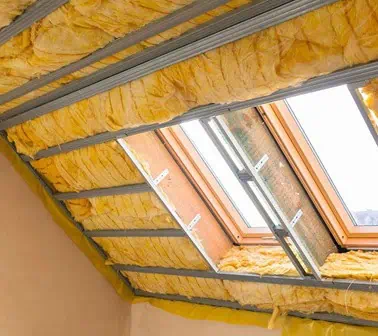
Wall Insulation
Wall insulation improves thermal performance while significantly reducing noise transfer between rooms. By filling wall cavities and internal partitions, it helps maintain more stable indoor temperatures and creates quieter, more comfortable living and working spaces.
It’s particularly effective for improving privacy by limiting sound movement through internal walls. When installed during drywalling or renovation projects, it enhances overall building performance.
Best for: Acoustic insulation, thermal comfort, privacy.
Common materials: Cavitybatt, Cavitylite, Acoustic glasswool.
Learn more → Wall Insulation
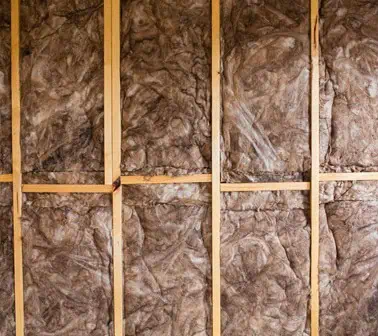
Floor Insulation
Floor insulation reduces heat loss through concrete slabs and suspended floors, helping to stabilize indoor temperatures throughout the building. By limiting heat transfer through the floor, it improves overall thermal comfort and prevents rooms from feeling cold underfoot.
It’s particularly important in double-storey homes and buildings with underfloor heating systems, where temperature control and heat retention play a key role in energy efficiency.
Best for: Cold floors, underfloor heating, double-storey homes.
Common materials: Summit XPS, polystyrene sheets.
Learn more → Floor Insulation

Under Slab Insulation
Under slab insulation reduces heat loss through ground-bearing concrete slabs while helping to control moisture rising from the soil below. Installed beneath the slab during construction, it forms a continuous thermal barrier that limits heat transfer into the ground.
It’s particularly effective in new builds and extensions, where it can be integrated into the slab design from the outset.
Best for: New builds, extensions, radiant floor heating, ground-floor slabs.
Common materials: XPS insulation boards, EPS polystyrene sheets, rigid insulation panels.
Learn more → Under Slab Insulation
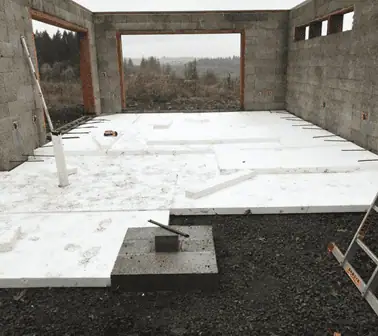
Soundproofing Insulation
Soundproofing insulation absorbs noise and helps prevent sound transfer between rooms, apartments, offices, and floors. By reducing airborne noise and vibration, it creates quieter, more comfortable indoor environments suited to both residential and commercial spaces.
It’s especially effective when installed within internal partitions, ceilings, or floor systems where privacy and noise control are important.
Best for: Homes, studios, offices, boundary walls.
Common materials: Acoustic glasswool, high-density insulation.
Learn more → Soundproofing
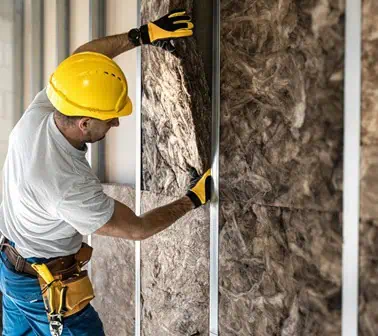
Fire-Rated Insulation
Fire-rated insulation is essential for improving building safety and helping to protect occupants in the event of a fire. These A1 non-combustible materials are designed to resist ignition and limit the spread of flames, making them suitable for use in ceilings, walls, and other critical building areas.
Fire-rated insulation is commonly specified in commercial buildings and sensitive environments where fire performance is a key requirement.
Best for: Fire safety, commercial buildings, SANS 10400-XA compliance.
Common materials: Aerolite, Knauf Earthwool, Factorylite, Cavitybatt.
Learn more → Fire Rated Insulation

Geyser Insulation (Geyser Blankets)
Geyser insulation reduces heat loss from geysers by wrapping the tank in a high-performance thermal barrier. By limiting standby heat loss, it allows water to stay hot for longer periods, reducing the frequency at which the geyser needs to reheat and lowering overall electricity consumption.
It’s especially effective in homes with older or uninsulated geysers, as well as installations where hot water pipes are exposed.
Best for: Lower electricity costs, improved hot-water efficiency, older geysers without built-in insulation.
Common materials: Foil-faced glasswool geyser blankets, multi-layer thermal wraps.
Learn more → Geyser Insulation

Pipe Insulation (Hot & Cold Water Pipes)
Pipe insulation prevents heat loss on hot-water lines while stopping condensation from forming on cold-water pipes. By maintaining more stable pipe temperatures, it improves overall energy efficiency and reduces unnecessary heat loss as hot water travels from the geyser to taps.
In addition to thermal benefits, pipe insulation helps prevent pipe sweating and protects plumbing from temperature fluctuations, particularly in exposed roof spaces and service areas.
Best for: Hot water pipes, cold water lines, solar geyser systems, exposed pipe runs.
Common materials: Glasswool, NBR rubber pipe lagging, polyethylene pipe insulation.
Learn more → Pipe Insulation

Why Choosing the Right Insulation Application Matters
Installing the correct insulation in the correct area ensures:
- Maximum temperature regulation
- Lower heating and cooling costs
- A quieter home or workspace
- Longer-lasting insulation performance
- Better moisture and condensation control
- Compliance with South African energy regulations
Related Content:
Professional Installation in Johannesburg, Centurion & Pretoria
Home Insulations supplies and installs insulation throughout:
- Johannesburg
- Centurion
- Pretoria
Our expert teams ensure correct application, proper thickness, and municipal compliance.
Related Insulation Pages
- Insulation – A full breakdown of insulation types and uses.
- Materials – Explore insulation by material type.
- Guides – Expert tips for installation, care, and choosing materials.
- Comparisons – Compare insulation products and materials side by side.